
Last updated November 17, 2026
 Home additions & ADU
 Kitchen remodeling
 Bathroom remodeling
 Roofing
 Windows & doors
 Driveway & pavers
 Fence
Free written scope consultation - allowances, timeline, and change-order rules on paper before a single trade is scheduled
Seasonal Construction Care for Mesquite: Year-Round Homeowner’s Guide
Most homeowners here think of maintenance as a spring-cleaning chore and a fall gutter scoop, then assume the house takes care of itself the rest of the year. But Mesquite doesn’t run on a four-season calendar. It runs on a stress cycle: a long, brutal heat stretch that expands every material on the house, brief and violent freeze events that contract them again, and two hail windows that hammer the roof and gutters. The costliest repairs we see don’t come from years of neglect. They come from missing short windows of opportunity, especially a two-week stretch in late fall when soil moisture and temperature together set up how the next spring’s cracks will look. This guide organizes your whole year around that cycle instead of the calendar, so you catch problems while they’re still cheap to fix.
Quick Answer
The best seasonal construction care in Mesquite follows a heat-freeze-storm stress cycle, not the traditional four seasons. Your priorities are a pre-summer inspection of roof, caulking, and HVAC in April and May, disciplined foundation watering through the hot months, a post-freeze walkthrough of concrete and stucco, and a fall joint-sealing window before the wall movement of winter. Get those four sequences right and you prevent most of the expensive damage a Mesquite home is prone to.
Styles & brands we work with
- Kitchen remodeling
- Bathroom remodeling
- Home additions & ADU
- Roofing
- Windows & doors
- Driveway & pavers
- Fence
Table of Contents
- Why Mesquite Homes Age on a Stress Cycle, Not a Calendar
- The Pre-Bake Checklist: April and May, Before 100°F Arrives
- Foundation Watering in Mesquite: Soil, Not a Schedule
- The Post-Freeze Inspection Sequence
- Hail Season Prep: Roof, Gutters, and HVAC Condensers
- The Fall Caulking and Joint-Sealing Window
- Exterior Surfaces: Driveways, Fences, and Pavers
- Timing Interior Projects Around the Stress Cycle
Why Mesquite Homes Age on a Stress Cycle, Not a Calendar
Mesquite sits on expansive clay soils, and those soils are the engine behind most of the movement in your walls and slab. In the traditional maintenance model, you winterize in fall and open up in spring. Here, the damaging sequence is heat, then freeze, then storm, and each one hits a different assembly on the house. Summer heat pushes roof shingles, caulk joints, and sealants to their expansion limit. A brief freeze contracts everything back in a hurry and opens hairline cracks. The storm seasons test whatever the heat and freeze loosened.
That’s why a homeowner who follows a generic national maintenance checklist can still end up with a driveway that’s spiderwebbed and a stucco wall that’s weeping at the joints. The timing of the work matters more than the work itself. Our technicians have up to 13 years of experience, and the pattern they see is consistent: the homes that age gracefully are the ones that get ahead of each stress phase rather than reacting after it.
Here’s the cycle in plain terms:
- Heat expansion (May through September): shingles, sealants, caulk, and exterior paint absorb the most stress. This is when small roof defects become leaks.
- Freeze contraction (typically December through February): concrete, stucco, and exterior tile crack along the weakest lines. This is also when clay soil movement is at its most unpredictable.
- Storm windows (March and again in October): hail, wind, and driven rain find every gap the previous two phases opened up.
When you understand the cycle, the maintenance calendar almost writes itself. Instead of asking “what month is it,” you ask “what’s the house about to endure,” and you prepare for that.
The Pre-Bake Checklist: April and May, Before 100°F Arrives
The pre-bake window is the single most valuable two months on the Mesquite maintenance calendar. Once the thermometer settles into the triple digits, you lose the comfortable working conditions to fix things and you start the season with whatever vulnerabilities you entered it with. Spend April and May walking the house with a critical eye, and you’ll spend the summer with far fewer surprises.
Work through this in order:
- Inspect the roof from the ground and with binoculars. Look for lifted, curling, or missing shingles, granule loss in the gutters, and any rusted or backed-out fasteners. Note the brands on your roof, since GAF, CertainTeed, and Owens Corning shingles each have their own profile. If your roof is approaching the end of its life, this is the season to plan a replacement rather than patch it into the heat.
- Re-caulk every exterior joint that flexes. Focus on window and door frames, corner trim, and any seam where two materials meet. Heat expansion will pull a tired caulk line apart within weeks, so a fresh bead in May buys you a full season.
- Clear and test the HVAC system. Replace filters, clear the condenser of debris, and have a technician check refrigerant and connections before the first 100°F day. An HVAC failure in July is a far bigger problem than one caught in April.
- Check attic ventilation and insulation. A hot roof deck bakes shingles from underneath. Confirm your soffit and ridge vents are clear and that no insulation is blocking airflow.
- Look at stucco and exterior tile for early hairline cracks. Sealing these now, before the expansion season, keeps them from widening into moisture paths.
If you’d rather have a trained eye do the walkthrough, that’s exactly what a free estimate visit covers. Call (844) 761-6059 to schedule one. We answer 24/7, and fast dispatch runs 7am to 7pm, Sunday through Friday.
Foundation Watering in Mesquite: Soil, Not a Schedule
Foundation watering advice you find online is usually written for a national audience, and it almost always fails here. The generic advice says to water “deeply and infrequently” on a fixed schedule. But the clay soils under Mesquite homes don’t respond to a schedule; they respond to their own plasticity, meaning how much they swell when wet and shrink when dry. Get the watering wrong and you get differential movement, which is what cracks slabs, separates door frames, and fissures stucco.
Here’s the practical version:
- Watch the soil, not the calendar. Walk the perimeter and look at the soil at the edge of the slab. If it’s pulling away and showing wide cracks, the clay is shrinking and needs water. If it’s saturated and spongy, back off; overwatering softens the soil and lets the foundation settle unevenly.
- Water the perimeter evenly. A soaker hose or drip line set a consistent distance from the slab keeps moisture uniform. Random hose spraying creates wet and dry pockets, which is what drives the differential movement that cracks walls.
- Water in the cooler part of the day. Early morning gives the soil time to absorb before the sun bakes the surface and evaporates most of what you applied.
- Never let the perimeter dry out completely in summer. A clay soil that shrinks hard and then gets flooded is the worst case for your slab. Consistency is the whole game.
If you’re already seeing stair-step cracks in brick, doors that stick in one season and swing free in another, or separation at the corners, get a professional assessment before you self-diagnose. Foundation movement is one of the few areas where guessing is expensive. A free estimate from Construction Mesquite can tell you whether what you’re seeing is cosmetic or structural.
The Post-Freeze Inspection Sequence
Freeze events in Mesquite are brief, but they do a specific kind of damage that compounds fast if you miss it. The morning after a hard freeze, most homeowners check the plants and the pipes and call it done. The real damage shows up in concrete, exterior tile, and stucco, and it shows up in a predictable sequence. Walk the house within a week of the thaw, in this order:
- Driveways and walks first. Freeze contraction opens cracks along the weakest lines in concrete and pavers. Small cracks are a sealing job; wide cracks with vertical displacement mean the base underneath moved and need a closer look.
- Exterior tile and stone next. Look for popped or hollow-sounding tiles on porches and steps. Tile that lifted during the freeze will fail fully within a season once water gets under it.
- Stucco and wall joints third. Hairline cracks in stucco are normal after a freeze, but cracks wider than a hair, or any crack that runs diagonally from a corner, deserve professional attention.
- Window and door frames last. Check that seals and caulk didn’t split. A split seal here is the entry point for the moisture that wall movement will pull in over winter.
The reason the sequence matters is that damage in one assembly hides damage in the next. A freeze crack in a driveway is visible; the same freeze event opening a stucco joint above it is not. Get the whole picture before you start scheduling repairs. Construction Mesquite offers free estimates on all of these, and a written line-item quote tells you exactly what needs doing and what can wait.
Hail Season Prep: Roof, Gutters, and HVAC Condensers
Mesquite gets two hail windows a year, one in March and one in October, and the difference between a smooth insurance claim and a fight is what you documented beforehand. The prep work takes an afternoon and it protects you in two ways: it prevents damage where you can, and it gives you a record to point to when a storm comes through.
Here’s what to inspect before each hail window:
- Roof surface. Note the age and brand of your shingles. Hail damage looks different on different products, and knowing whether you have Owens Corning or CertainTeed shingles helps an adjuster and a roofer speak the same language. Photograph the roof at the start of each season so you have a before-and-after reference.
- Gutters and downspouts. Loose or clogged gutters won’t just overflow in a hail-driven rain; they’ll tear away from the fascia under the weight. Tighten hangers and clear debris before storm season, not after.
- HVAC condenser. Hail dents condenser fins and can total an older unit. If your condenser sits exposed, a simple cover or a screen barrier protects it between storms. Check the fins after any hail event for crushed or bent coils.
- Skylights, vents, and roof penetrations. These are the first places hail finds a weakness. Inspect the seals around every penetration before the season starts.
After a hail event, resist the urge to climb up and inspect for yourself. Hail damage on a roof is genuinely hard to see from the ground and genuinely dangerous to inspect from a ladder. Have a roofer look. If your roof needs replacing, our Construction Mesquite team works with GAF, CertainTeed, and Owens Corning systems and can walk you through the options.
The Fall Caulking and Joint-Sealing Window
The last two weeks of October into early November are your best sealing window of the year, and missing it is one of the most common mistakes we see. Here’s why the timing is precise. By late fall, temperatures have dropped enough that caulk cures reliably without the heat pulling it apart, but the winter clay movement hasn’t started yet. Seal during this gap and the caulk is set and flexible before the wall movement begins. Seal too late and you’re working against the movement. Seal too early and the summer heat degrades the fresh bead.
What to target in this window:
- All exterior joints where materials meet. Window frames, door frames, corner trim, and any seam between siding, stucco, and masonry.
- Joint seals around penetrations. This includes hose bibs, dryer vents, and any pipe that passes through an exterior wall.
- Joints that flexed during the heat season. Walk the house and look for any spot where last summer’s expansion opened a gap. Those are the joints most likely to let winter moisture in.
Use a flexible exterior-grade sealant rated for clay-soil movement rather than a rigid filler. If you’re not sure what failed and what held, a professional inspection in that two-week window can save you a spring full of repairs. Call (844) 761-6059 for a free estimate. We answer 24/7, with fast dispatch from 7am to 7pm, Sunday through Friday.
Exterior Surfaces: Driveways, Fences, and Pavers
Your hardscape takes the full brunt of the stress cycle, and it’s where the difference between a brand-name install and a builder-grade one really shows. Concrete driveways crack when the clay moves, and the crack pattern tells you a lot about what’s happening underneath. Paver drives and patios handle movement better because individual units can shift without opening a single crack, but only if the base was built to spec. This is where material choice matters: pavers from Belgard, Unilock, or Tremron are engineered for movement, and brands like Oldcastle and Quikrete build the base and joint materials that hold the system together.
For fences, the seasonal stress shows up at the posts. Clay movement tilts posts over time, and a fence installed with the right post depth and material holds far longer than one that wasn’t. Fencing brands like Master Halco, Ameristar, and Bufftech hold up to the heat and the freeze cycle without the sag and lean that cheap materials develop.
Driveway and paver care across the year:
- Spring (before the heat): Seal concrete cracks and re-sand paver joints before summer expansion.
- Summer: Watch for settling and keep the surface clean. Seal the surface if the finish is wearing.
- After freeze: Inspect for popped pavers and new cracks, and address them before water works its way under the base.
If your driveway or patio is due for replacement, our driveway & pavers service covers everything from base prep to the finished surface, and our fence installation team works with the brands above. Both are handled under one contract and one warranty relationship.
Timing Interior Projects Around the Stress Cycle
Interior projects in Mesquite have a right season too, and it isn’t about the weather inside your house. It’s about the exterior conditions that affect materials during installation and the movement of the structure around them. Kitchen and bathroom remodeling involves cabinet and countertop installation that is sensitive to humidity and temperature, and it’s affected by the same clay movement that cracks stucco. Getting the timing right means your new work settles into a stable house.
The general guidance:
- Plan kitchen and bathroom remodels for the cooler months. Fewer triple-digit days during construction means better working conditions and fewer temperature swings affecting cabinet, countertop, and fixture installation. KraftMaid and Wellborn cabinetry, Cambria and Silestone countertops, and Kohler and Moen fixtures all install best in stable conditions.
- Schedule window and door replacement before the heat and before the freeze. Both seasons stress new seals. Impact-rated and energy-efficient lines from PGT, CGI, and Therma-Tru perform best when installed in mild weather so the seals cure properly.
- Plan ADU and addition work in the fall or spring. Larger structural projects benefit from moderate conditions. Our home additions & ADU service covers both prefab-platform options from Abodu and similar, and fully custom additions, so you can choose the path that fits your timeline and budget.
Interior work is where the single-source approach really pays off. Instead of coordinating a separate framer, cabinet installer, plumber, and finish carpenter, you work with one company that moves the project through each phase on a schedule that accounts for what the house is enduring outside.
Common Mistakes to Avoid
- Following a national maintenance calendar. Generic “winterize in fall, spring-clean in April” advice ignores the heat-freeze-storm cycle that actually drives damage here. It’s the number one cause of preventable repairs.
- Watering the foundation on a fixed schedule. Clay responds to moisture level, not to a timer. Overwatering softens soil and causes settling; underwatering shrinks it. Read the soil at the slab edge.
- Skipping the post-freeze inspection because nothing visible cracked. That freeze opened cracks in stucco, tile, and window seals that you won’t notice until they’ve grown into moisture intrusion. Walk the sequence within a week of the thaw.
- Sealing exterior joints too late in the fall. If winter clay movement has already begun, fresh caulk will fail within weeks. The window is narrow, in late October into early November.
- Ignoring the roof during the pre-bake season. Lifted shingles and backed-out fasteners discovered in May are a weekend fix; the same defects discovered in August are a leak and a ceiling repair.
- Inspecting the roof yourself after hail. Hail damage is hard to see and dangerous to inspect from a ladder. Have a trained professional document it for your claim.
- Choosing builder-grade materials for hardscape. Pavers and fencing that aren’t engineered for clay movement and heat will fail within a few seasons regardless of good installation.
See the difference
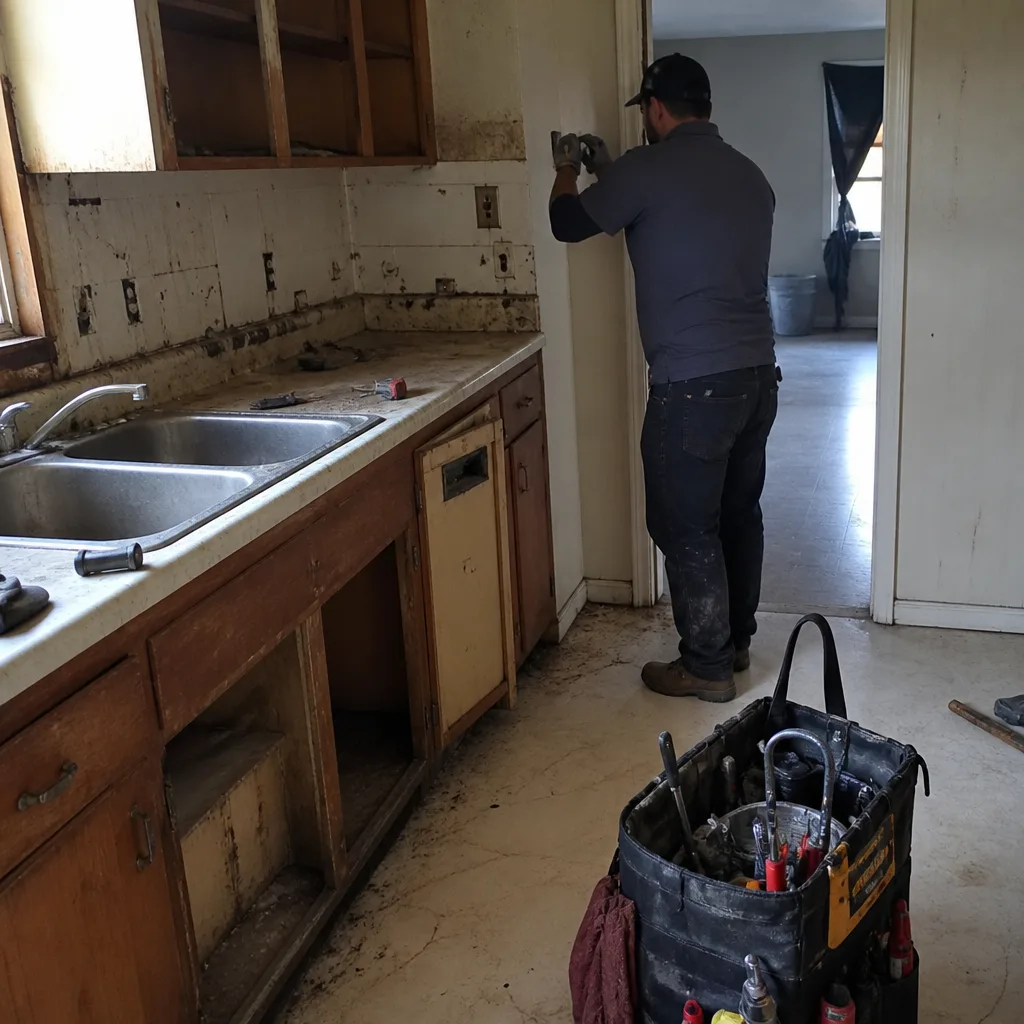 Before
 After
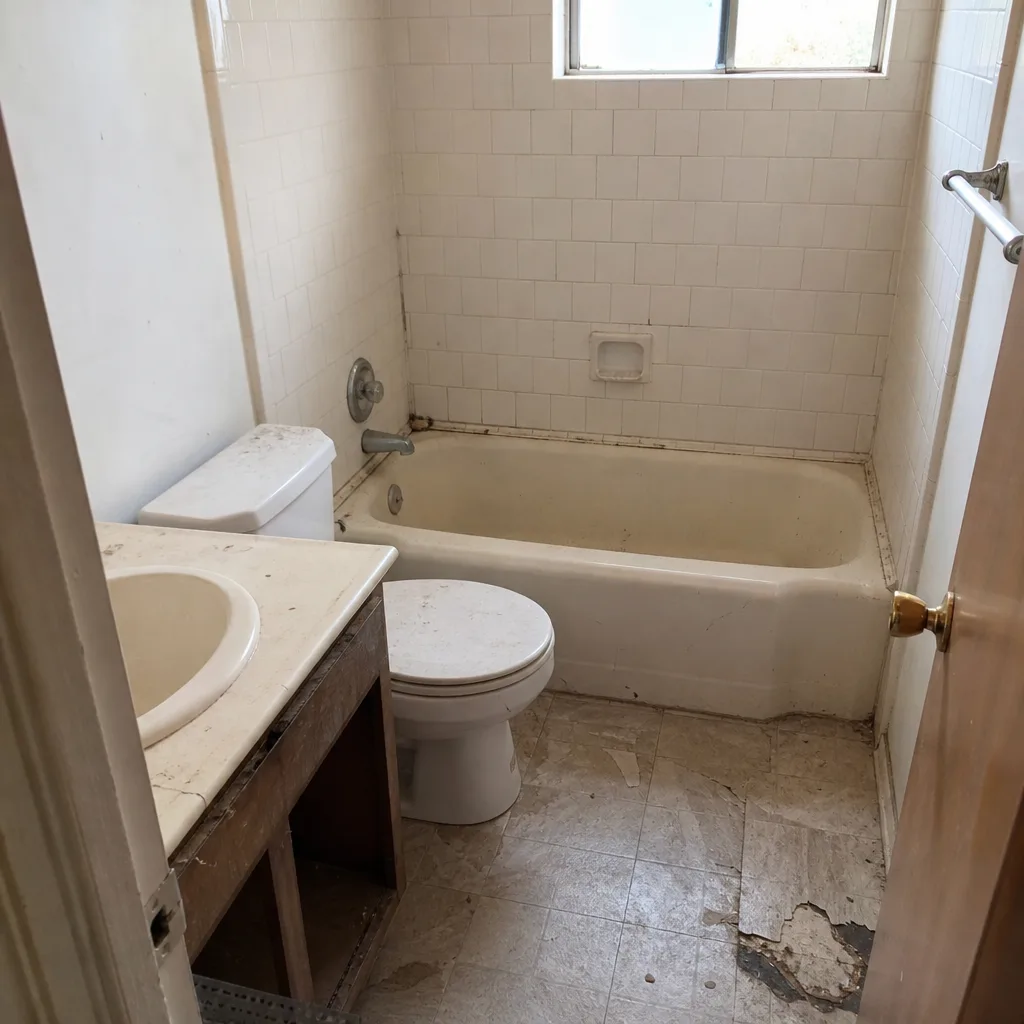 Before
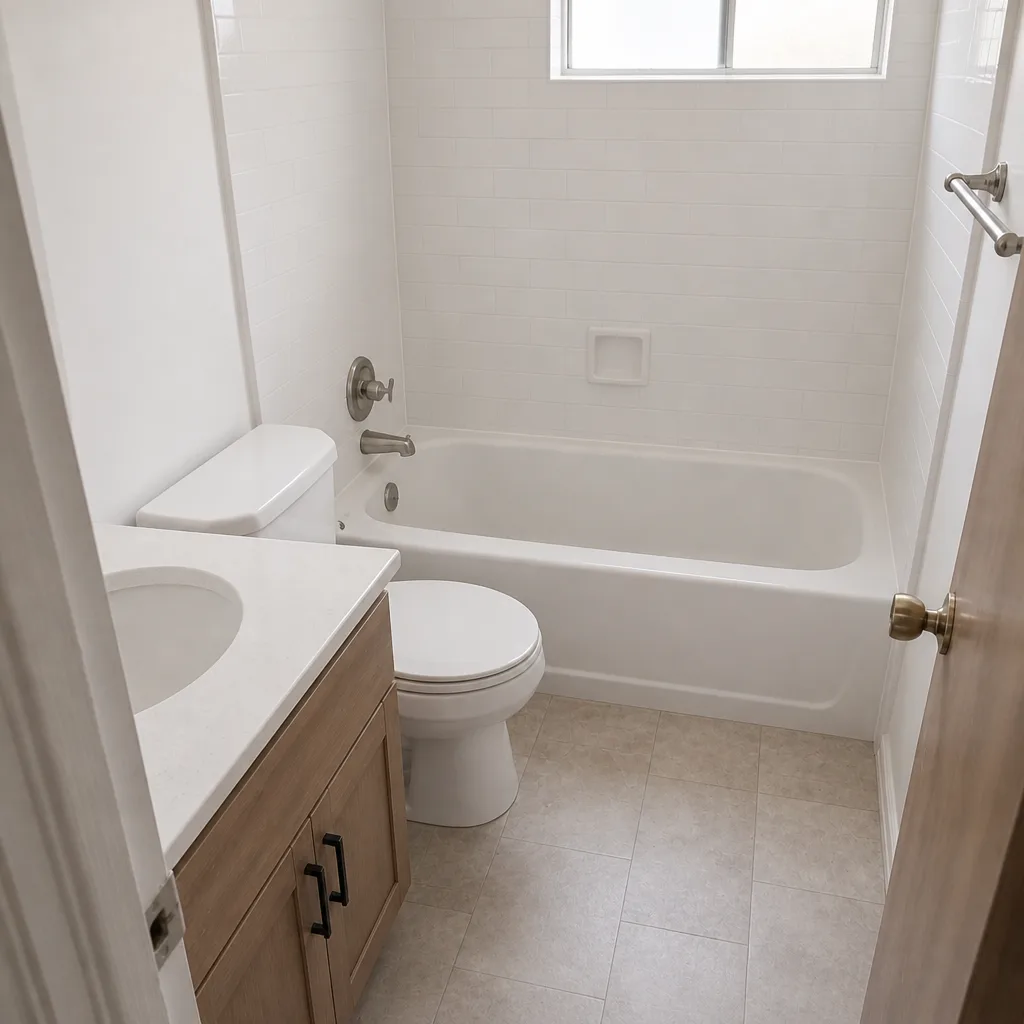 After
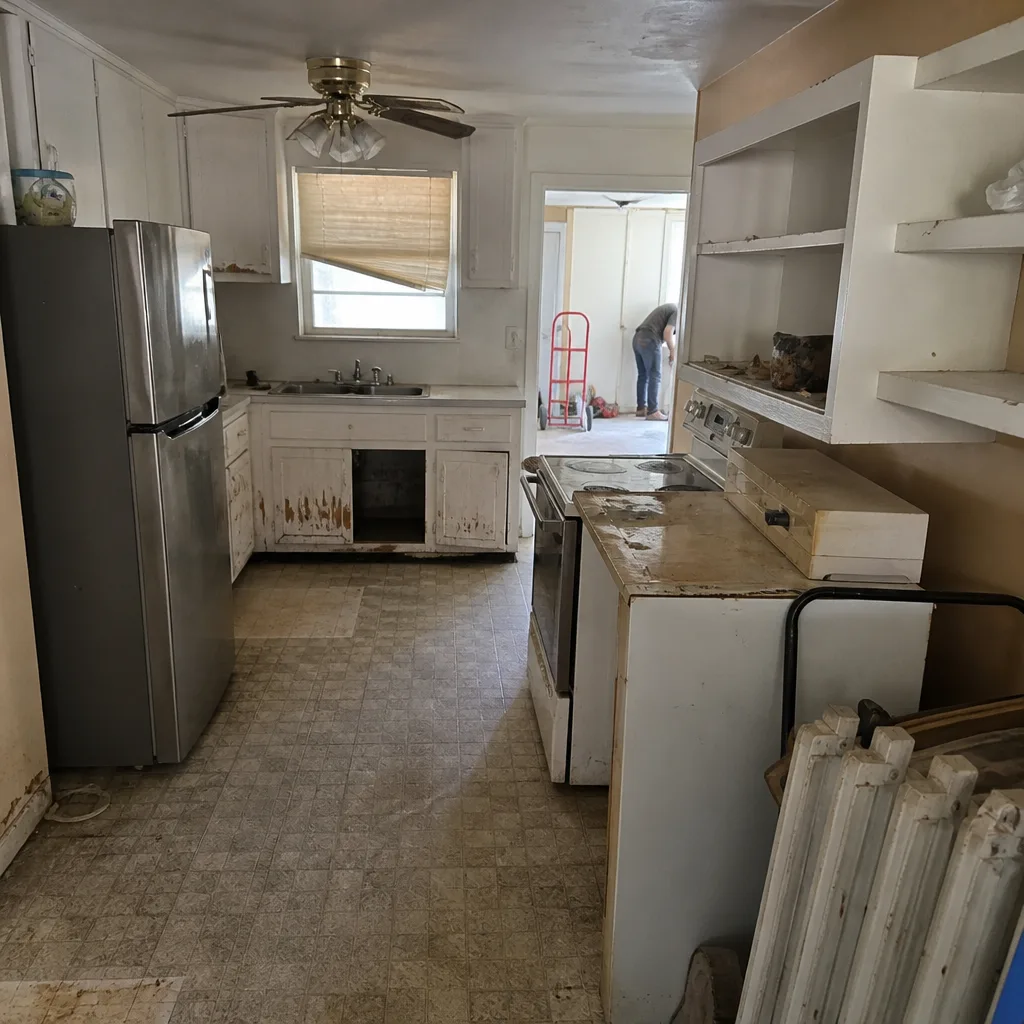 Before
 After
When to Call a Professional
Some seasonal care is safely a homeowner’s job: replacing HVAC filters, clearing gutters from the ground, and reading the soil at the slab edge. But there are clear scenarios where a hands-off approach costs more than a call. If you see stair-step cracks in brick, doors that stick in one season and swing free in another, or stucco cracks wider than a hair, get a professional foundation assessment. If your roof is nearing the end of its life or you’ve had a hail event, have it documented and assessed by a roofer. If the fall caulking window has passed and you’re worried about winter moisture, a professional joint inspection now can save you a spring repair. And if you’re planning a kitchen, bathroom, ADU, or exterior project, get the scope and materials right before the work starts. Construction Mesquite offers free estimates in Mesquite, and every quote is a written line-item so you know exactly what’s included – call (844) 761-6059.
Frequently Asked Questions
The pre-summer roof, caulking, and HVAC inspection in April and May is the highest-value task of the year. Catching defects before the 100°F stretch begins costs a fraction of catching them in August when a small roof flaw has become a leak and a failed HVAC unit has become an emergency.
There’s no fixed schedule; you water when the clay soil at your slab edge is shrinking and pulling away, and you back off when it’s spongy. Uniform, gentle perimeter watering in the cooler part of the day keeps the soil stable. For a specific assessment of foundation movement, call (844) 761-6059 for a free estimate.
Late fall or early spring, before the summer heat and outside the freeze and storm windows. Roofing materials install best in moderate conditions, and a new roof has its seals set before the next stress cycle begins. If you’re unsure whether replacement is due, a free estimate from a roofer who works with GAF, CertainTeed, and Owens Corning systems will tell you.
Walk your concrete, exterior tile, stucco, and window seals in that order within a week of the thaw. Hairline cracks in concrete are normal; wide cracks, popped tiles, and stucco cracks wider than a hair should be professionally assessed before water and heat make them worse.
Not always. Hail damage on a roof is often subtle from the ground and becomes a leak later. Inspect your gutters and HVAC condenser right after any hail event, and have a roofer document the roof. For help, call (844) 761-6059. We answer 24/7, with fast dispatch from 7am to 7pm, Sunday through Friday.
Most minor repairs like caulking, sealing, and replacing worn shingles don’t require a permit, but larger work like roof replacement or structural repair usually does. Ask your city’s building department before starting work that changes structure or systems. When you hire us, permits are pulled and inspections passed as part of the job.
The Bottom Line
Seasonal construction care in Mesquite isn’t about following a national calendar. It’s about getting ahead of the heat, the freeze, and the two storm windows. Your four highest-value actions are a pre-bake inspection in April and May, soil-driven foundation watering through summer, a post-freeze walk of concrete, tile, and stucco, and a joint-sealing pass in the narrow fall window. Do those four and you prevent most of the structural and moisture damage a house here is prone to. For anything that needs a trained eye, or if you’re planning a remodel, roof, or exterior project, our team is here.
Call (844) 761-6059 for a free estimate. We answer 24/7, with fast dispatch from 7am to 7pm, Sunday through Friday. One contractor, every project phase, from the driveway to the roofline – built to stay.
Written by the team at Construction Mesquite.