
Last updated November 17, 2026
 Kitchen remodeling
 Bathroom remodeling
 Home additions & ADU
 Roofing
 Windows & doors
 Driveway & pavers
 Fence
Free written scope consultation - allowances, timeline, and change-order rules on paper before a single trade is scheduled
How to Hire a Construction Contractor in Mesquite: A Step-by-Step Guide
In Texas, the term “licensed contractor” is loosely regulated at the general contractor level. That surprises most homeowners, and it should. There’s no single state license that qualifies someone to build your whole project. Which means the license someone shows you at the kitchen table might be an HVAC certification, a plumber’s license, or a mold remediation credential – each real, each narrow, none of them a broad stamp of approval to run your remodel. In Mesquite, hiring well comes down to reading the process: who pulls the permit, who signs the contract, who answers when an inspection fails. This guide walks you through that process, step by step, so a good sales pitch can’t outrun a thin paper trail.
Quick Answer
To hire a construction contractor in Mesquite, verify what credentials their scope actually requires, pull their permit history from the city yourself, and get a written contract that ties payments to passed inspections and hands you lien waivers from every subcontractor. The best protection isn’t a handshake or a low bid – it’s a paper trail that survives the first disagreement.
Styles & brands we work with
- Kitchen remodeling
- Bathroom remodeling
- Home additions & ADU
- Roofing
- Windows & doors
- Driveway & pavers
- Fence
Table of Contents
- What Texas Licensing Actually Requires of Your Contractor
- How to Check a Contractor’s Permit History in Mesquite
- The Five Contract Clauses That Protect You
- Red Flags in the DFW Subcontractor Market
- Why Single-Source Accountability Matters Legally
- Questions to Ask Before You Sign
- How to Compare Bids Fairly
- Common Mistakes to Avoid
What Texas Licensing Actually Requires of Your Contractor
Texas does not issue a general contractor’s license. That single fact reshapes how you should vet anyone in Mesquite. Instead of one all-purpose credential, the state regulates specific trades through different agencies, and each scope of work carries its own rules. Understanding that split is the first real step.
Here’s how the pieces fit together:
- State licensing by trade. Electricians, plumbers, and certain HVAC work fall under Texas Department of Licensing and Regulation (TDLR) rules. Air conditioning and refrigeration contractors are licensed through TDLR as well. If your project touches those systems, ask for the trade license specific to that work.
- Roofing and specialty trades. Some trades have their own registration or certification structures. Roofing, for example, is largely driven by manufacturer certifications and local permitting rather than one state general license.
- City-level registration. Many municipalities, Mesquite included, require contractors to register with the city and pull permits for the work. Registration confirms a contractor is on record with the city – it does not confirm craftsmanship.
- The TRCC caveat. The Texas Residential Construction Commission once handled homebuilder disputes and warranty standards. It was abolished, so homeowners today rely on contract terms, permits, and civil remedies instead of a state warranty board.
The practical takeaway for a Mesquite homeowner: don’t ask “are you licensed?” and stop there. Ask “which credential applies to each part of my job, and who holds it?” A general remodeling contractor coordinating your project should be able to name the licensed trades they’ll bring in for electrical, plumbing, and HVAC, and show you that those people are credentialed.
When you hire a single contractor for the full scope – roof to driveway to kitchen – you shift the burden of coordinating those credentials onto one accountable party. That’s how we structure projects at Construction Mesquite, because it removes the gaps where unlicensed work can hide.
How to Check a Contractor’s Permit History in Mesquite
Any contractor can tell you they always pull permits. Verifying it takes about fifteen minutes, and it’s the most revealing check you can run. Mesquite publishes permit records, and a contractor with a clean history of documented, inspected work leaves a trail you can follow.
Here’s the step-by-step:
- Contact the city’s building department or use its online permit portal. Ask how to search permits by address or by contractor name.
- Search the contractor’s name or company. Look for a pattern of pulled permits on projects similar to yours. A roofer with no roofing permits on file is a warning.
- Ask for the permit numbers on their last three comparable jobs and cross-check them yourself. Good contractors expect this and hand the numbers over without hesitation.
- Check the inspection results. Permits show whether inspections passed, failed, or were never scheduled. Repeatedly failed or incomplete inspections tell you something the sales pitch won’t.
- Confirm who pulled the permit. If a contractor routinely has homeowners pull their own permits as “owner-builder,” that transfers legal responsibility to you and can complicate resale.
Why does this matter so much in Mesquite? Because the inspection process is where shortcuts surface. A contractor who skips permits is often skipping the inspections that catch structural, electrical, and plumbing problems – and you won’t discover the consequences until you sell, refinance, or file an insurance claim. Permits pulled and inspections passed are worth more than any brochure claim.
What a Permit Actually Protects
A permit triggers an independent set of eyes on the work. For structural additions, electrical rough-ins, and plumbing, that third-party review is your insurance against hidden defects. When we take on a project in Mesquite, we pull the permits and schedule the inspections as part of the job – not as an optional add-on. That’s the standard you should hold any contractor to.
The Five Contract Clauses That Protect You
The contract is where a good project is won or lost. A detailed, fair contract protects both sides; a vague one protects whoever wrote it. Before you sign in Mesquite, make sure these five clauses are present and specific.
- Mechanic’s lien waivers. Every subcontractor and material supplier has a legal right to place a lien on your property if the general contractor doesn’t pay them. Require the contractor to collect and deliver signed lien waivers from every sub and supplier as work is completed and paid. Without these, you can pay in full and still face a lien.
- Inspection-tied payment schedule. Structure payments to follow passed inspections, not just calendar dates. A deposit to start, then payments released as rough-in passes, framing passes, and so on. This keeps the contractor’s incentive aligned with quality and gives you leverage if work stalls.
- Material spec sheets attached as exhibits. Naming a brand in the proposal means little unless the exact product line is written into the contract. Attach spec sheets for cabinetry, countertops, fixtures, roofing, and pavers so there’s no “equivalent substitution” surprise. A written spec is what makes a brand promise enforceable.
- A fixed scope with a defined change-order process. Every change should require a signed, written change order with its own price before the work happens. This prevents a string of verbal add-ons that inflate the final bill.
- An express workmanship warranty and punch-list process. Spell out what happens at the end: how the punch list is created, who fixes items, and how long the workmanship warranty runs. Vague warranty language is where finger-pointing starts.
Good contractors bring contracts like this to the table. If you have to fight for lien waivers or inspection-tied payments, that tells you something about how the job will go. The written estimate and contract set the final price – get everything in writing, and read it before the first nail goes in.
Red Flags in the DFW Subcontractor Market
The Dallas-Fort Worth market moves fast, and it draws a mix of established crews and opportunists. Mesquite sits right in that flow, close to major hail corridors and a steady stream of storm-driven door-knockers. Knowing the patterns helps you separate a real contractor from a traveling one.
Watch for these:
- Storm chasers after hail events. After a significant hailstorm, out-of-area crews descend on DFW neighborhoods offering quick roof replacements. They collect deposits, do the work fast, and are gone before problems show. Ask for a local address, a permit history in Mesquite specifically, and references from work done here more than a year ago.
- Pressure to sign today. “This price is only good if you sign now” is a sales tactic, not a courtesy. Established contractors are busy and won’t manufacture urgency.
- Large cash deposits. A reasonable deposit to start is normal; a demand for most of the money upfront in cash is not. Money should follow milestones and inspections.
- No permit history. A contractor who can’t produce permit numbers for past similar jobs in town is either new, unlicensed for that scope, or cutting corners. All three are reasons to walk.
- Subcontracted accountability gaps. A “general” who simply brokers your job to whoever’s available and disappears is a recipe for blame-shifting. You want one party who owns the whole outcome.
None of this is about being suspicious of everyone. It’s about recognizing that the DFW market rewards diligence. A contractor with a documented Mesquite track record will welcome your questions and have answers ready.
Why Single-Source Accountability Matters Legally
Every trade brings its own contract, its own warranty, and its own reasons to deflect blame. When something fails – a roof leak that turns out to be a flashing error, a cabinet that won’t close because the wall wasn’t true – the finger-pointing begins, and you’re stuck in the middle. Structuring your project so one party owns the entire result is a legal safeguard, not just a convenience.
Here’s the difference single-source accountability makes:
- One contract, one signature. You agree to terms with one party who’s responsible for all phases. There’s no gap between the roofer’s scope and the framer’s scope where a problem can fall through.
- One warranty relationship. When one entity stands behind the whole project, a warranty claim doesn’t dissolve into “that was the other guy’s trade.” The party you hired answers for the outcome.
- No coordination gap to exploit. Subcontractors who never coordinate with each other create the exact conditions where delays and defects hide. A single point of responsibility closes that gap.
This is genuinely rare in the market and worth prioritizing. Most homeowners end up juggling a roofer, a window company, a kitchen specialist, a paver crew, and a fencing outfit – five contracts, five warranties, five schedules. A contractor who handles the full scope under one contract and one warranty relationship removes the friction. It’s the model we build around: one team from the driveway to the roofline, so the buck stops in one place.
Whether your project is a home additions & ADU build or a whole-home exterior refresh, ask each bidder how they’d structure responsibility. The answers reveal how they handle conflict before there is any.
Questions to Ask Before You Sign
A good contractor answers hard questions directly. The way they respond tells you almost as much as the answer itself. Bring this list to every bid meeting and take notes – dodge or deflect is a red flag.
- Which permits will you pull, and can I see numbers from past jobs? You want a specific answer tied to your scope, and you want to verify it.
- Who are the actual tradespeople on my job? Ask whether the workers are employees or subcontractors, and which licensed trades will be involved.
- What’s your payment schedule, and how is it tied to inspections? You’re listening for milestone and inspection-linked payments, not a big upfront lump sum.
- How do you handle change orders and unexpected issues? You want a written, signed process – not a verbal “we’ll figure it out.”
- What’s your workmanship warranty, and what does it cover? Request it in writing and ask for the punch-list process too.
- Can you provide lien waivers as we go? The right answer is immediate and confident.
- Can I see two recent references for jobs like mine in this area? Recent and comparable beats a list of decades-old projects.
Pay attention to how a contractor talks about their own scope. A team confident in what they do – and what they don’t – is a team you can trust to tell you the truth about your project. A brand portfolio you can actually choose from, not a single forced option, is another sign of a serious operator: cabinet lines like KraftMaid and Wellborn, countertops from Cambria, Silestone, and Caesarstone, fixtures from Kohler and Moen, roofing from GAF and CertainTeed, and pavers from Belgard and Unilock all show a contractor who sources real material quality.
How to Compare Bids Fairly
Comparing bids is about scope, not just the bottom-line number. The cheapest proposal and the most expensive one can describe the same project while hiding very different amounts of work. Read every bid line by line against the others.
- Match the scope. A bid that omits demolition, permits, hauling, or finish details isn’t cheaper – it’s incomplete. Make each bidder confirm they’ve included every line you want.
- Compare materials by name. Ask for the exact product line and model, not just a brand. “Premium countertop” is not a spec; Silestone is.
- Compare the payment schedule. Two bids at the same total can carry very different risk depending on how payments are staged.
- Compare the warranty. A longer, clearer workmanship warranty has real value. Ask what’s covered and for how long.
- Compare the communication. How did each bidder respond to your questions, and how fast? How they communicate during bidding is usually how they’ll communicate during the job.
For exterior work especially, ask whether the bid reflects Mesquite’s climate and housing stock. The region deals with heat, seasonal storms, and clay-heavy soil that shifts and swells. Clay soil moves, and that affects driveways and patios – the base preparation matters as much as the paver surface. A bid that hand-waves prep and base work for a driveway & pavers project is a bid that will show cracks sooner rather than later.
Take your time. A significant remodel is a major investment, and a week spent comparing scope carefully is worth far more than a fast signature.
Common Mistakes to Avoid
- Judging the bid by the headline number. The lowest total is usually the one with the most missing scope. Compare line items, not lump sums, or you’ll pay for what got left out.
- Assuming a state license covers the whole job. In Texas, trade licenses are narrow. Confirm the specific credential that applies to each part of your Mesquite project rather than accepting a general “we’re licensed.”
- Accepting a verbal promise of permits. Anyone can say they pull permits. Verify the number and the inspection record yourself – this is the single best shortcut to a real contractor.
- Skipping lien waivers. Paying in full without collecting waivers from subs and suppliers can leave you exposed to a lien on your own home even after the job is done.
- Signing a vague contract with no change-order process. Without written change orders, small requests snowball into big final bills. Lock the process down before work starts.
- Hiring the post-storm door-knocker on the spot. After hail, out-of-area crews target DFW neighborhoods. Ask for a documented Mesquite permit history and references on work completed more than a year ago.
- Letting the trades coordinate themselves. When every scope belongs to a different contractor, accountability dissolves the moment something goes wrong. Prefer one party who owns the whole project.
See the difference
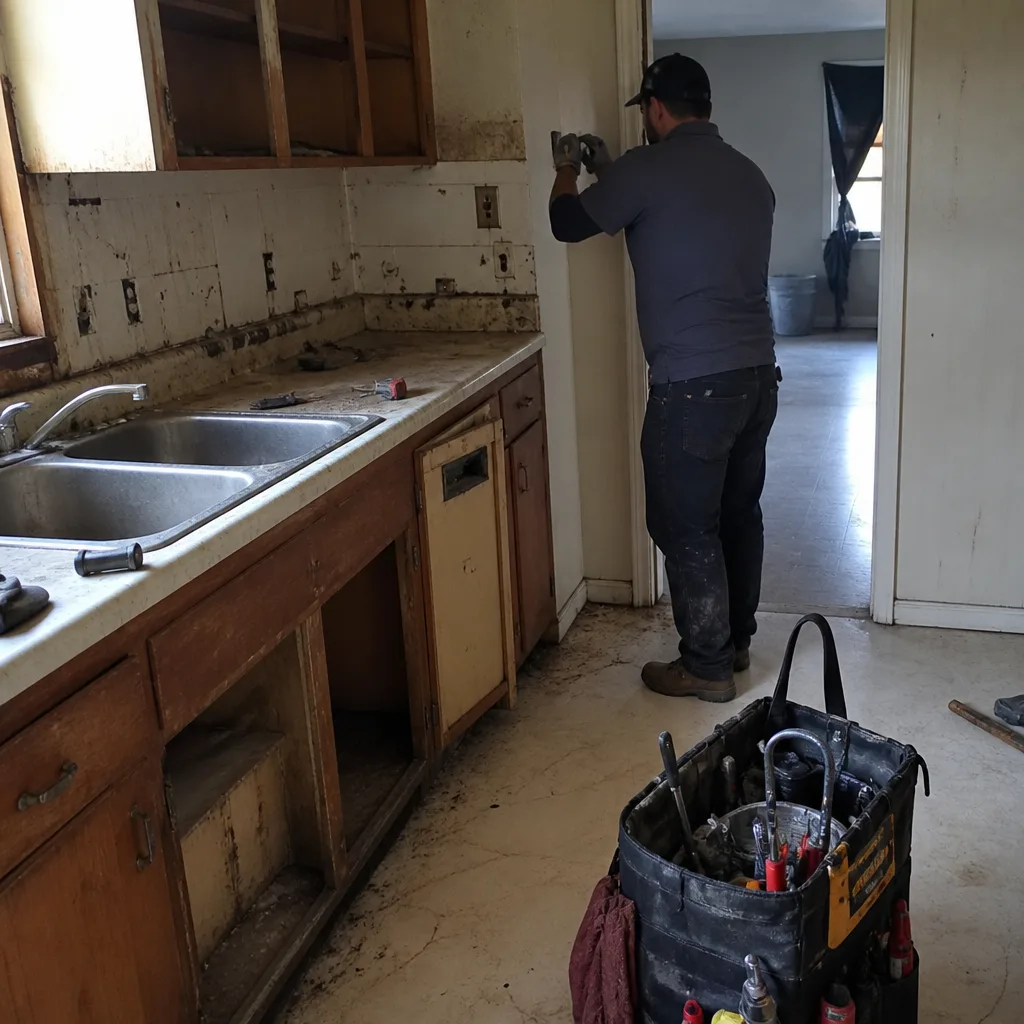 Before
 After
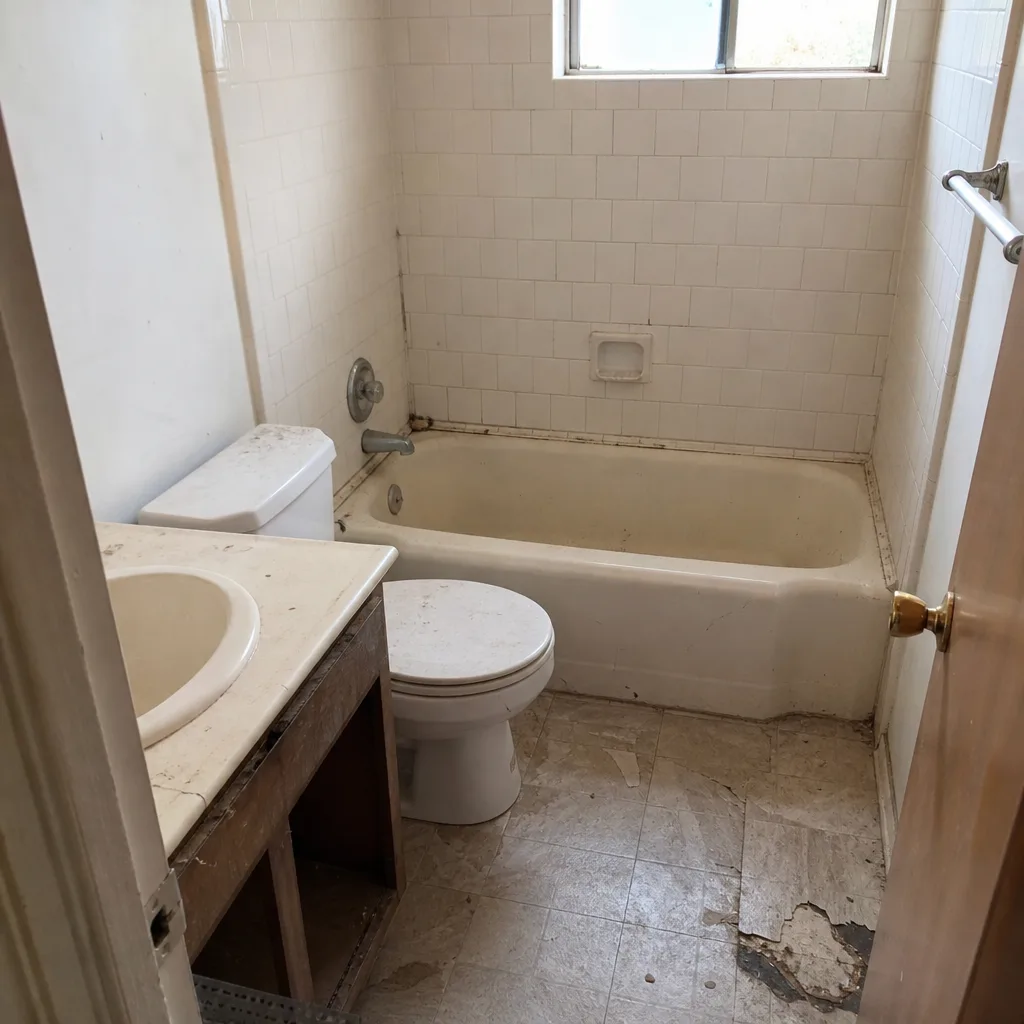 Before
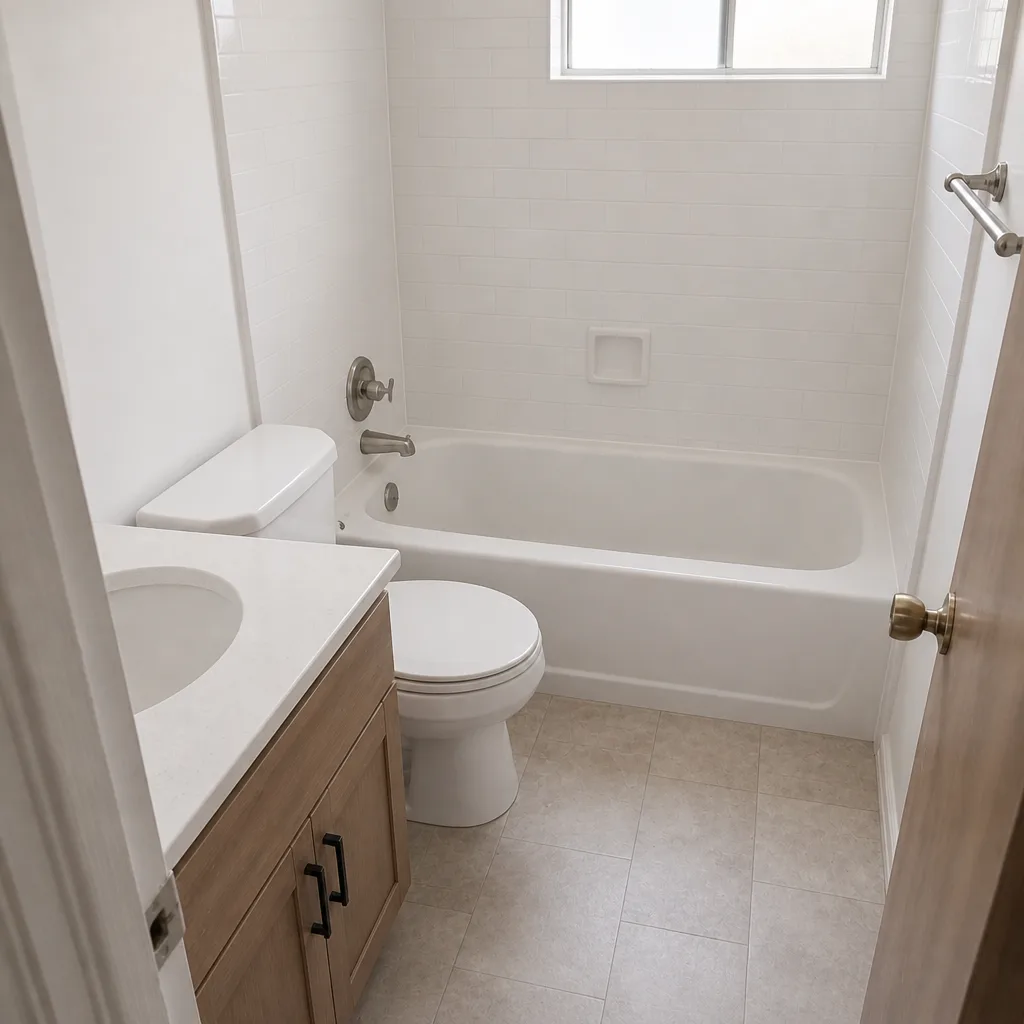 After
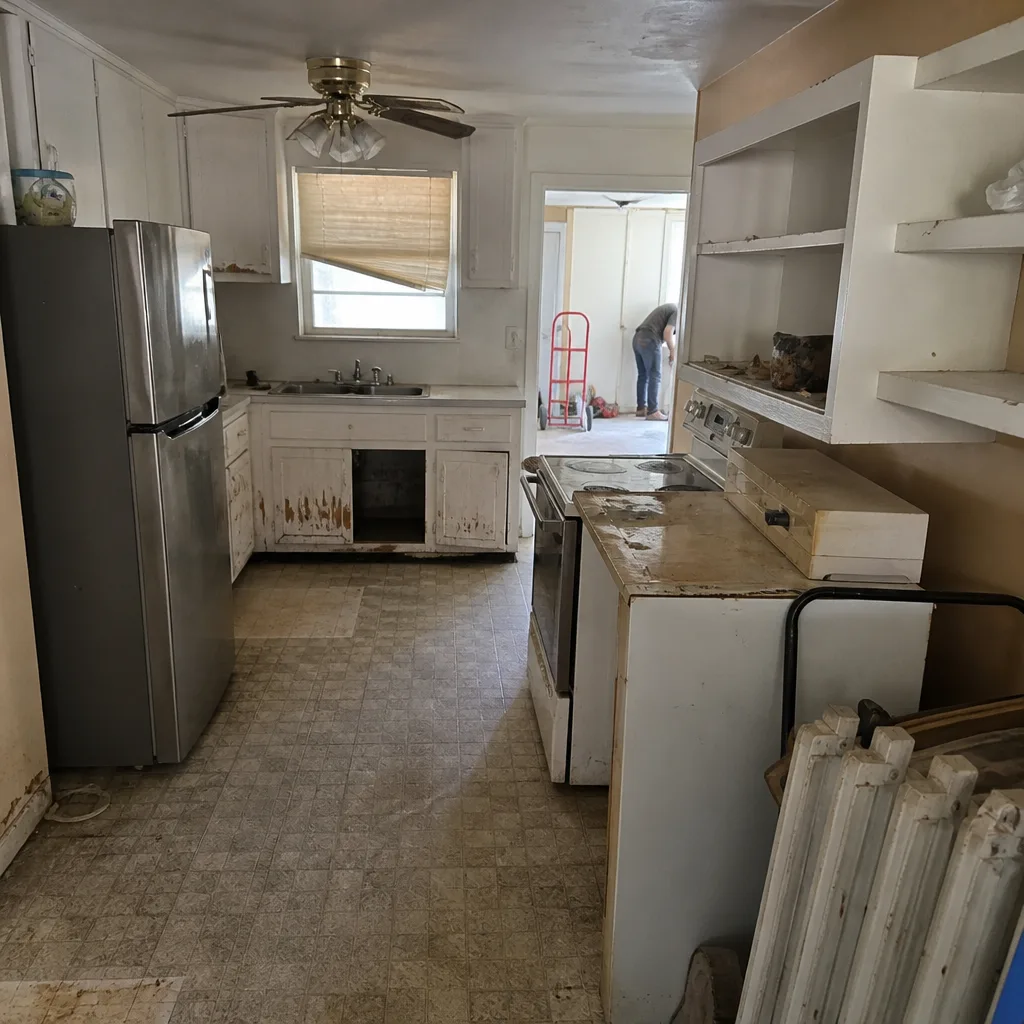 Before
 After
When to Call a Professional
Some projects leave you no real choice. Structural work, electrical rough-in, gas and plumbing lines, and anything requiring a permit should be handled by a licensed, permitted professional – and that includes additions and ADUs where the foundation, framing, and inspections all need to pass. Roof work involves height and fall risk, and electrical panels and wiring can be lethal to anyone without training; both call for a professional, and neither is a place for casual DIY. If a contractor starts offering to skip the permit to save you money, that itself is your signal to walk. A rare full-scope combination – the ability to handle additions, roofing, kitchens, bathrooms, windows, fencing, and pavers under one contract – also happens to be the combination that shields you from blame-shifting. Construction Mesquite offers free estimates in Mesquite; call (844) 761-6059 to talk through your project.
Frequently Asked Questions
Texas does not license general contractors at the state level, so there’s no single general contractor license to check. Instead, individual trades are regulated – TDLR licenses electricians, plumbers, and HVAC contractors, for example – and the city requires contractors to register and pull permits for covered work. Verify the credential that applies to each trade in your project rather than asking for one blanket license.
Search Mesquite’s building department records by contractor name or property address, or ask the contractor for recent permit numbers and cross-check them yourself. A pattern of pulled permits and passed inspections on comparable jobs is the strongest paper trail you can find. A contractor with no local permit history on similar work deserves hard questions before you sign.
At minimum: mechanic’s lien waivers from every sub and supplier, a payment schedule tied to passed inspections, material spec sheets attached as exhibits, a written change-order process, and an expressed workmanship warranty with a punch-list procedure. These clauses protect you against liens, hidden substitutions, and inflated final bills. Get them in writing before work begins.
Cost depends heavily on scope, materials, and the trades involved, so there’s no single number – and any contractor who quotes one without seeing your project is guessing. The written, line-item estimate is what sets your final price. Call (844) 761-6059 for a free estimate on your specific project.
Watch for storm chasers who arrive after hail events, pressure to sign the same day, large cash deposits, no local permit history, and vague contracts with no change-order process. These patterns point to a contractor who prioritizes a fast sale over a lasting result. A real contractor will welcome your questions and have documented answers ready.
When every trade is a separate contractor, a defect can fall into the gap between scopes and turn into finger-pointing that delays or denies your warranty claim. One contract and one warranty relationship with a single accountable party closes that gap. It’s the difference between one party who answers for the whole project and five who can each point elsewhere.
The Bottom Line
Hiring a contractor in Mesquite is a reading exercise. Read the credentials trade by trade, read the permit record with your own eyes, and read every clause of the contract before you sign. The best protection isn’t a slick proposal or a low bid – it’s a documented process that survives the first disagreement. Prioritize a contractor who pulls the permits, ties payments to inspections, hands you lien waivers, and owns the whole scope under one contract. That combination, plus a written warranty, is what a significant home investment deserves. Start with a free estimate, compare the paperwork carefully, and hire for the process, not the pitch.
Ready to talk through your project? Call (844) 761-6059. We answer 24/7. Fast dispatch from 7am to 7pm, Sunday through Friday. Every estimate is free and every quote is written line by line, so you can see exactly what you’re getting before you commit – whether it’s a fence installation, a roof, a kitchen, or the full scope from the driveway to the roofline.
Written by the team at Construction Mesquite.